Planning a shared sauna for a glamping property
In the HobbitHut walkthrough, a timber terrace leads to the sauna’s rounded door. That entrance is a useful place to start planning a shared sauna: where will the next guests wait while the previous group leaves, and where will they put their belongings?
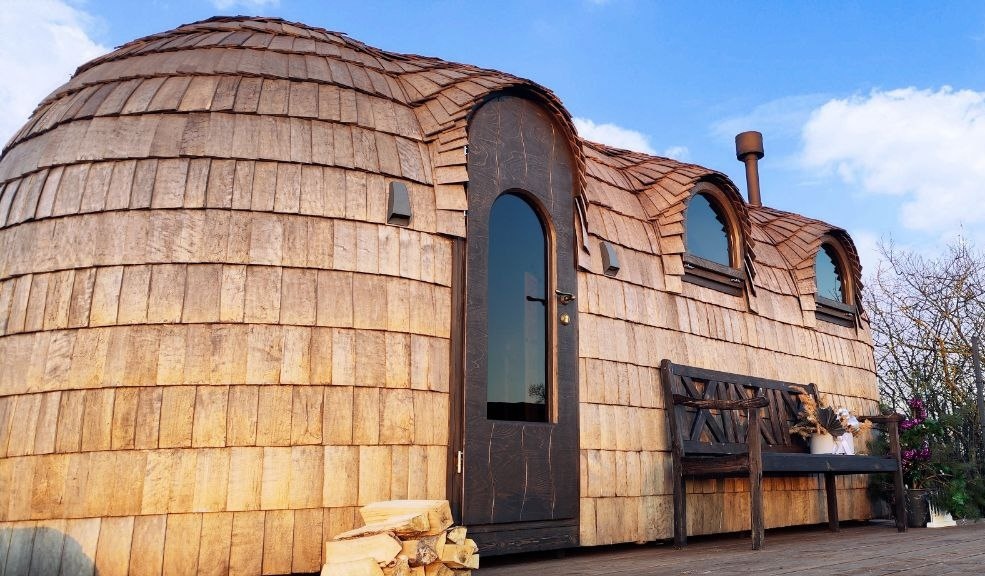
Those decisions affect the space around the sauna as much as the room itself. Before choosing a configuration, sketch the guest route and decide how bookings will work. A sauna serving several cabins needs an operating plan alongside its equipment specification.
Follow the walk from the cabin
Trace the route from a guest’s front door to the sauna, including the return trip. Consider an evening booking in the months you intend to stay open. Mark changes in level, exposed stretches and places where the route passes another cabin’s windows. Ask your site designer to review access and lighting for that route rather than treating the sauna as an isolated object on the site plan.
Then place the arrival point. Guests need to understand whether they can enter or should wait. A booking confirmation can explain that arrangement before they leave their cabin; a sign at the entrance can repeat it without making them search for a member of staff.
The video is a reference for the appearance and approach shown. It does not establish the dimensions, accessibility or suitability of that arrangement for your property. Send your own route sketch with the site information for a quote.
Give changing space a place on the drawing
Decide whether guests change in their cabins or at the sauna. If they change at the sauna, ask for the proposed changing area on the same drawing as the hot room. Mark where dry clothing stays and where used towels are collected. Include a waiting or resting area in the site discussion if you intend to provide one.
GTC’s HobbitHut Sauna page describes capacity up to six users, depending on configuration. That figure does not tell you how many people can change comfortably or wait outside. Request the layout for the version being quoted, including any changing room, rather than assuming the pictured exterior contains every space your operation needs.
Choose a booking arrangement before filling the calendar
Private bookings give one party the room for its reserved period. Shared sessions bring separate parties together and need a clear arrival arrangement and stated capacity. Tell guests which arrangement they are booking. The selected equipment instructions and applicable requirements should inform the operating rules; this guide does not prescribe a bathing duration.
Consider a hypothetical property with four cabins and one sauna offered for private bookings. Two parties want the same evening slot. The operator needs a way to show availability and confirm the reservation, plus time between bookings for the assigned staff member to inspect and prepare the space. Four cabins do not imply four consecutive sessions without a break.
Set the booking interval after testing the actual preparation and reset routine with the selected equipment. Do not build the calendar around a generic warm-up claim from another sauna listing. Explain cancellations and late arrivals in the reservation terms so staff do not have to negotiate them at the door.
Assign the work between bookings
Write down who checks the room after use and who releases it for the next booking. Keep that responsibility separate from collecting the booking fee or handing over a key. Plan storage for clean supplies and a collection point for used items so the reset does not depend on carrying everything from reception each time.
Harvia’s sauna-care guidance discusses bench protection, after-use cleaning and drying. Its basic-cleaning frequency is explicitly for a family sauna; it should not be copied into a shared-property schedule. Obtain care instructions for the actual materials and equipment, then establish the routine appropriate to your use with the supplier and responsible professionals.
Record equipment faults separately from routine cleaning. Tell staff who can take the sauna out of service and how guests will be notified when a booking cannot proceed.
Keep equipment choices separate from the booking concept
A booking system does not establish that a heater can be operated remotely. Harvia’s commercial-use overview describes controls that distinguish operator settings from guest options, and notes that remote operation requires the applicable safety arrangements. These are examples of equipment-specific capabilities, not features promised with a GTC HobbitHut order.
Ask for the heater and control model in the quotation, with the matching operating instructions. Have qualified project professionals review installation and local requirements. Keep the proposed booking process provisional until you know how the selected sauna will actually be operated.
When you request a GTC quote, select HobbitHut Sauna and include your destination and cabin count. In the project notes, describe private or shared bookings, your changing-space preference and the operating season. Ask for the sauna package and surrounding site work as separate items, using the project-budget guide to check which party supplies each part.